
Loading ...
Staff-level Backend Engineer and active Machine Learning Researcher with 15+ years of experience designing, building, and operating high-scale distributed systems serving over 10M+ monthly active users. Currently leading the architecture of mission-critical .NET 8 microservices at one of Iran’s largest InsurTech platforms while simultaneously conducting cutting-edge research in recommender systems and applied deep learning at University of Kurdistan.
Proven track record in delivering extreme performance and cost efficiency: reduced P95 latency by 45%, cut infrastructure costs by 40%, and improved MTTR by 60% through event-driven architectures, gRPC, observability stacks (OpenTelemetry → Prometheus → Grafana), and Kubernetes-native deployments. Technical lead for 20+ engineers, owning system design, architecture reviews, hiring, and long-term roadmap planning.
Current research focuses on Graph Neural Networks, self-supervised learning, sequential and multi-modal recommendation systems, model compression for edge deployment, and AI-driven optimization in energy grids and telecommunication networks. Passionate about bridging state-of-the-art academic research with production-grade, low-latency, scalable backend systems.
Open to worldwide remote or relocation opportunities (EU Blue Card, Canada Express Entry, Australia skilled migration eligible). Full professional proficiency in English.
Currently active as a researcher collaborating remotely with the AI & Data Science research group at University of Kurdistan. My work centers on cutting-edge recommender systems and applied machine learning, with special emphasis on Graph Neural Networks (GNNs), sequential modeling, self-supervised learning, and efficient deep learning architectures. In parallel, I explore real-world industry-oriented ML challenges in energy systems, telecommunication networks, and resource-constrained embedded environments — bridging academic research with production-grade requirements for scalability, latency, and energy efficiency.
As a Senior Full-Stack Engineer (Backend-Heavy) at Iran Insurance Corporation, one of the largest insurance platforms in the Middle East, I lead architecture and development of high-scale, mission-critical backend systems serving over 10 million monthly active users and more than 1 million daily requests. I own the full transition to modern event-driven microservices using .NET 8, gRPC, Redis, Kafka, and ClickHouse, while driving performance, observability, cost optimization, and technical leadership for 20+ engineers across multiple squads.
As a Senior Software Engineer at Naftaz, Iran’s largest fuel-payment and consumer fintech platform, I designed and delivered high-traffic, real-time backend systems processing multi-billion annual transactions. I owned critical real-time and analytics modules using .NET Core/.NET 6, Kafka, ClickHouse, SignalR, and WebSockets while ensuring extreme reliability, low latency, and near real-time business insights for millions of daily active users.
As a Senior Backend Developer at Yarwene Group (US-based media & content platform), I designed and operated scalable, real-time backend systems supporting high-traffic mobile applications and large-scale media/content delivery pipelines. Working fully remote from Iran, I owned performance-critical services built on .NET Core, SignalR, Redis, and SQL Server, consistently delivering low-latency experiences for millions of monthly active users across global regions.
During my Master’s degree, I conducted advanced research in distributed computing, high-performance backend systems, and scalable software architecture. My thesis and projects focused on designing efficient algorithms and prototypes for large-scale, fault-tolerant backend services, with particular emphasis on performance optimization, distributed data processing, and early adoption of modern architectural patterns that later became industry standards.
As one of the first software engineers at 7Ganjineh Ltd., I contributed to building the foundation of the company’s enterprise software stack using .NET Framework and SQL Server. These early projects ranged from internal business automation tools to customer-facing applications and laid the groundwork for my deep expertise in full-stack .NET development, database performance, and scalable system design.
 University of Kurdistan · Sep 2024 – Present (Remote)
Role: Researcher – Recommender Systems & Deep Learning
Details: Currently actively developing and researching state-of-the-art recommender systems using Graph Neural Networks (LightGCN, UltraGCN, PinSage variants), self-supervised learning, sequential modeling (BERT4Rec, SASRec), and multi-modal approaches. Focus areas include cold-start mitigation, long-tail recommendation, contrastive learning, model quantization, and efficient inference on edge/low-power devices.
Additional applied research tracks: ML-driven optimization in smart energy grids (load forecasting, demand response), telecom network analytics (graph-based anomaly detection), and TinyML deployment using PyTorch, PyG, DGL, and Weights & Biases.
 London, UK · 2024 (Remote)
Role: Project Manager & Lead Full-Stack Developer
Details: Full-stack real-time multiplayer game featuring dynamic gameplay, in-game chat, power-ups, and seamless player joining. Built with Blazor front-end and ASP.NET Core backend, real-time communication via SignalR, state management with Redis, JWT authentication, and modular clean architecture.
GitHub Link: View on GitHub
Iran Insurance Corporation · Apr 2023 – Present (Hybrid)
Role: Senior Full-Stack Engineer (Backend-Heavy) & Technical Lead
Details: Leading architecture and full migration of Iran’s largest insurance platform from legacy monolith to modern event-driven microservices serving over 10 million monthly active users and 1M+ daily requests.
Designed high-throughput services with .NET 8, gRPC, Redis, Kafka, and ClickHouse. Achieved sub-50ms P95 latency, 45% latency reduction, 40% infra cost cut, and 60% faster MTTR via OpenTelemetry → Prometheus → Grafana stack. Built real-time ops dashboards with Next.js 14 + React Server Components. Tech lead for 3 squads (20+ engineers).
 Canada · 2023 (Remote)
Role: Architect & Maintainer
Details: Production-ready reference implementation of Clean Architecture, Domain-Driven Design, CQRS, and full testing suite in .NET 8. Used worldwide as a starter template and learning resource.
Includes MediatR, EF Core, FluentValidation, xUnit + SpecFlow, Docker, Kubernetes manifests, Swagger, and health checks.
 Yarwene Group – Washington DC, USA · Nov 2018 – Mar 2021 (Fully Remote)
Role: Senior Backend Developer
Details: Designed and operated real-time, globally distributed backend systems for a US-based media platform supporting millions of monthly users and large-scale content pipelines. Built entirely with .NET Core, SignalR, Redis, RabbitMQ, and SQL Server.
Delivered instant live features via SignalR/WebSockets, multi-layer caching, and optimized data pipelines — consistently under 100ms response times at peak load. Built internal React dashboards for real-time monitoring.
During my Master's studies, I conducted in-depth research in distributed computing, high-performance backend systems, and scalable software architecture. My thesis and projects were centered on designing and prototyping fault-tolerant, high-throughput backend services using .NET Framework and the very first versions of .NET Core. The core focus was on performance optimization of large-scale data processing pipelines, distributed load balancing, low-latency inter-service communication, and early exploration of service-oriented and microservice-oriented patterns — concepts that directly shaped my 10+ years of production experience in event-driven architectures serving 10M+ monthly active users.
Published: April 2017
This paper explores cloud computing architecture with a primary focus on the MapReduce model. It details the distributed processing methodology and efficiency improvements in handling large-scale data.
Published: April 2017
This research presents a graph clustering technique for social networks using the random walk algorithm. It discusses its applications in community detection and network analysis.
Published: April 2016
This paper provides an in-depth review of local search algorithms in artificial intelligence, comparing their efficiency, convergence rates, and real-world applications.
Published: April 2016
A novel trust-based security management system is proposed to mitigate attacks in live P2P streaming networks, ensuring reliability and secure data transmission.
Published: April 2016 | ISSN: 2454-3896
A comparative study of different local search algorithms in AI, evaluating their performance in optimization problems and decision-making scenarios.
Published: April 2016 | ISSN: 1738-7906
This paper introduces an optimized C-Means clustering algorithm designed for wireless sensor networks (WSN), improving energy efficiency and data transmission reliability.
Published: April 2016 | ISSN: 1935-4185
A security framework is analyzed for defending against Sybil attacks in vehicular ad hoc networks (VANETs), improving authentication and node trust assessment.
Published: April 2016 | ISSN: 2476-5082
This research integrates swarm intelligence techniques with machine learning algorithms to enhance spam detection accuracy in online comment sections.
Published: April 2016
A study on ranking search engines using TF-IDF and Web Page Rank (WPR) algorithms, assessing their effectiveness in improving search relevance.
Including an accounting and finance program under the Internet network dedicated to automobile exhibitions with the Code of Conduct Guidance 34077 and the Country informatics Code 758009263.
Including an accounting and finance program under the Internet network for property consultants with the Code of Conduct Guidance 34078 and the National Information Security Code 286760896.
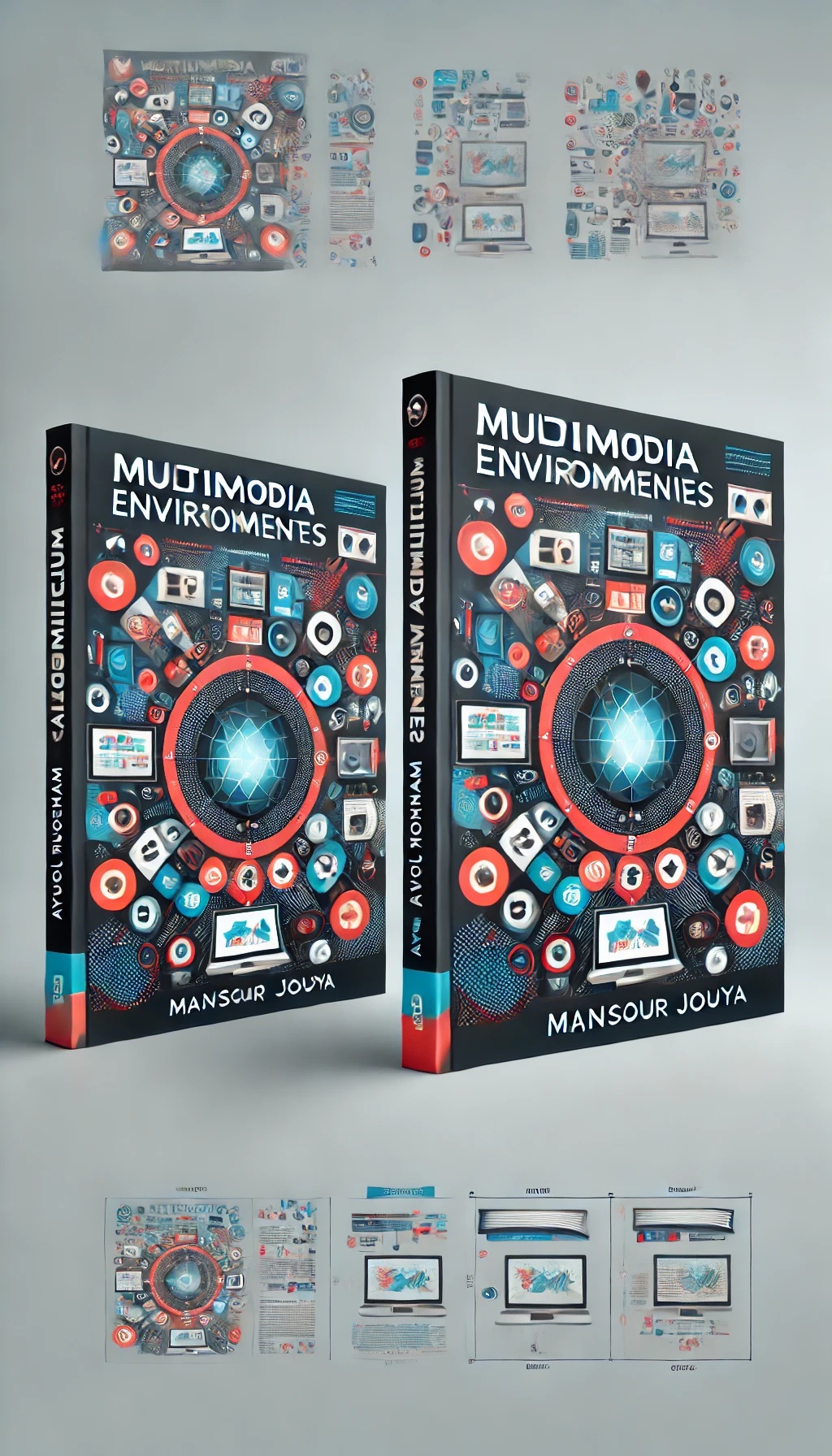
This comprehensive textbook, designed for University of Applied Science and Technology students, provides an in-depth exploration of multimedia fundamentals. It covers essential topics including various image formats, audio processing, and digital media integration, while offering practical insights into professional multimedia content creation. The book thoroughly examines different file formats and their applications, ensuring students gain a solid foundation in digital media management.
The text features detailed tutorials on animation creation, motion graphics, and video editing, supported by hands-on exercises using industry-standard software such as Adobe Photoshop, After Effects, and Premiere. It also includes comprehensive coverage of specialized tools like Captivate, Authorware, Camtasia, and various 3D applications. Students learn professional techniques for multimedia production, including sound editing with Sound Forge, interactive content development with Autoplay, and animation design using Flash tools, making it an essential resource for aspiring multimedia professionals.
Available at: National Library of Iran